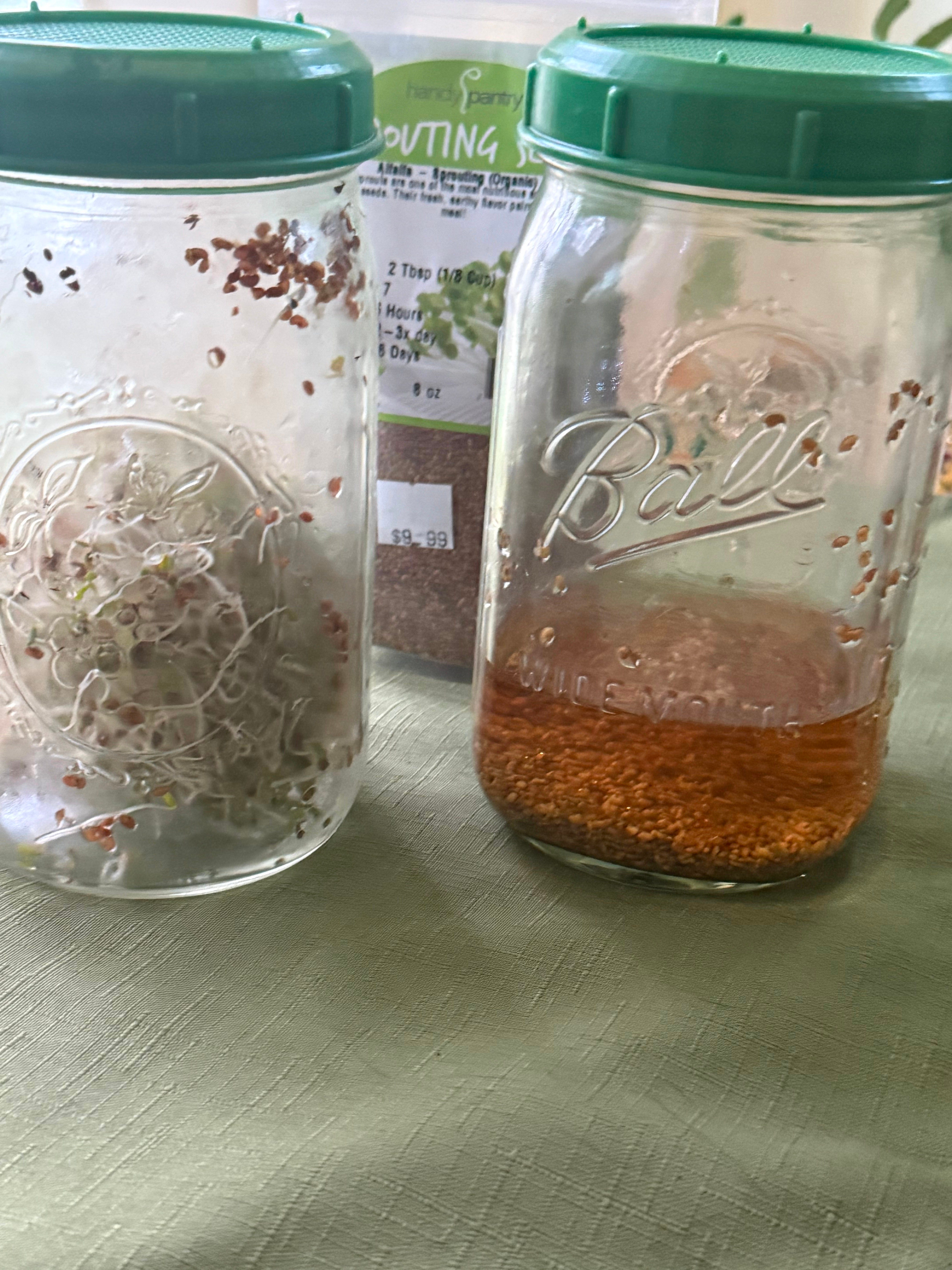
Sprouting
Simple, and a great boost for your health.

Sprouting for Health
Do you know the definition of a nutrient-dense food? It’s low in calories and high in nutrients. Sprouts are definitely in that category. Other health benefits of sprouts are:
· Sprouts are packed with antioxidants -- polyphenols and flavonoids -- that combat oxidative stress and inflammation in the body. Compounds in specific sprouts, like sulforaphane in broccoli sprouts, for one example, are powerful anti-inflammatory agents.
· They contain vitamins A and C, which help strengthen the immune system’s function.
· Sprouting neutralizes phytic acid and enzyme inhibitors, which are compounds in unsprouted grains and legumes that hinder the absorption of minerals and protein. So, you receive more bang for your buck, nutritionally speaking.
One note: Chlorine can weaken or break down sprout casings, making the internal seed more susceptible to damage and less likely to sprout successfully. If your water supply is chlorinated, you can let the tap water sit in an open container for 12 to 24 hours to allow most of the chlorine to evaporate, or do what I do and boil water the night before, let it cool overnight, and use that water, as most of the chlorine has dissipated. I do this for my sourdough starter and bread as well.
Place your seeds in a glass jar and cover with cold water. Swirl and let sit for 6-8 hours. Drain and add more water. Drain completely. I place the jar in the dish rack to drain. Rinse twice daily. When they are sprouted, store them in the fridge. That’s it!
Time to Sprout for Popular Varieties
This table details the typical duration required for various popular sprout types to be ready for harvest and consumption. The sprouting time can vary based on environmental factors like temperature and the frequency of rinsing.
Hard Red Wheat
2–3 Days
Mung Bean
2–5 Days
French/Green Lentils
3–5 Days
Kale
3–4 Days
Alfalfa
4 Days
Broccoli
4–6 Days
Daikon Radish
4–6 Days
Red Clover
6–7 Days
Sunflower
7–10 Days
Onion
10–15 Days
Chive
14–18 Days
Note: Sprouts are generally considered ready when they are between 1/2 to 2 inches (1.3 to 5 cm) long and the first tiny leaves (cotyledons) have appeared.
You can add sprouts to green salads, coleslaw, tuna salad, and grain salads. You can add them to smoothies, wraps, or sandwiches. If you’re an avocado toast person, top the toast with sprouts and minced red onion—yum!
I purchase my sprouts at Community Market in Santa Rosa, but you can find them in many stores or order online.
This is a lovely family-owned company, Mumm’s. This includes sprouts, a jar, and a strainer.
Here’s another, The Sprouting Company.
Happy Sprouting!