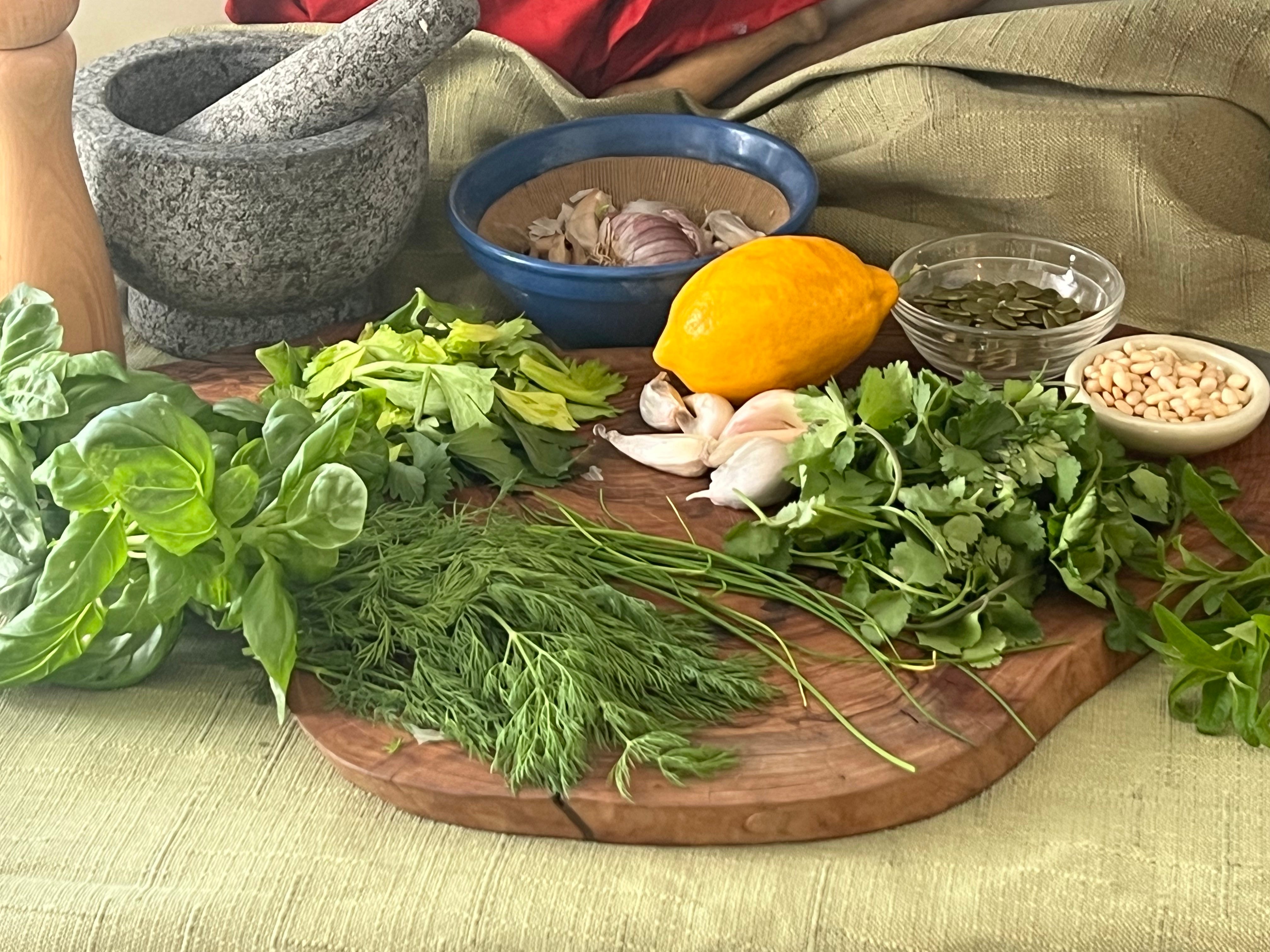
Seasonings
What does it mean to season?

Seasoning is the process of adding or improving the flavor of food. The correct seasonings for any dish will enhance the flavor of the food without competing or overpowering it. Salt is the most common flavor enhancer, and most people overuse it. When you do use salt, be sure to avoid the highly processed versions commonly found on grocery store shelves and use sea salt instead. When using black pepper, it’s preferable to use freshly ground. Before you reach for the saltshaker or peppershaker, what else could you use? Perhaps a little lemon or vinegar will brighten the flavor. Let’s not forget onions, garlic, ginger, and vegetable reductions. Seasonings include fresh and dried herbs, spices, condiments, and infused oils and vinegars.
When speaking of herbs, your first choice is whether to use fresh or dried herbs. Fresh herbs will generally add a better flavor. Remember that many herbs are best when used seasonally or dried while in season. Use care to use the freshest herbs you can find. Additionally, add the fresh herbs close to the end of the cooking time to keep their flavors bright. Dried herbs are convenient to have on hand; just be sure to store them properly so they don’t lose flavor. Many people keep their herbs by their stovetops for ease of use; however, heat and oxygen rob herbs of flavor. Store dried herbs in a cool, dark place and discard after one year, preferably 6 months. One other important tip about fresh vs. dried herbs: when a recipe calls for 1 tablespoon of fresh herbs, you would substitute with 1 teaspoon of dried. Dried herbs have a more concentrated flavor.
I had herbs in the garden at my school, and during one class, I was standing in front of sage, rosemary, and thyme with a group of 10–12-year-olds. I asked them what foods came to mind as they smelled these herbs, and their unanimous answer was Thanksgiving! They remembered a holiday-a day, more than an actual meal. Our sense of smell is a powerful way to remember fond memories. Years later, you might remember the feeling you had when you walked into the kitchen and smelled an apple pie baking.
Vegetable Reductions
A reduction is a sauce in which liquid, generally wine-based, is simmered on the stove, uncovered, until it reduces by 1/3rd or 1/2. You may also reduce almost any vegetable juice. Use the seasoning chart if you would like to season after you reduce. If you like, you may simmer some onions, garlic, etc. in a small saucepan for a few minutes and then add the vegetable juice for added flavor. Use your imagination and experiment. Vegetable reductions are a wonderful way to add vegetables as sauces to your meals. Mushroom stock can be reduced for a rich sauce; add some sherry and sage- wonderful.
Carrot Reduction
· 1 cup carrot juice
· ½ teaspoon curry powder
· 2 tablespoons rice wine vinegar
· Sea salt and pepper to taste
Simmer the carrot juice and reduce it by half. Add the remainder ingredients, whisk together, and serve. Try using balsamic vinegar sometimes, toss with pasta and steamed veggies.
Bouquet Garni
French for “garnished bouquet.” It is a bundle of herbs tied together with a kitchen string, placed into a soup, stew, or sauce, and removed before consuming. There are variations to bouquet garni, but most are as follows:
· 3 sprigs of parsley
· 1 bay leaf
· 2 sprigs thyme
· 1 - 3” celery stalk with leaves
Gremolata
Used in sauces or tossed on veggies:
2 tablespoons finely chopped parsley
1 minced clove of garlic
½ teaspoon lemon zest
Persillade
Simply omit the lemon from the Gremolata.
Gomasio
A suribachi is a mortar and pestle with ridges inside. Kids love to grind this and will eat many different foods if they can sprinkle a little gomasio on the top. Try this on steamed broccoli sprinkled with a bit of lemon juice and a sprinkle of gomasio.
· 2 teaspoons sea salt, coarsely salt
· 5 teaspoons sesame seeds
Lightly dry toast the salt and sesame seeds, stirring frequently until aromatic. Allow them to cool and grind them in a suribachi or a clean coffee grinder.
Pesto
Pesto is Italian for pounded. Often, pesto is made from basil with the addition of garlic, pine nuts, Parmesan, and olive oil. Thinking seasonally, in the winter, when basil is not available, try using parsley or arugula. An addition of sun-dried tomatoes and roasted red peppers is wonderful on pasta or roasted vegetables.
Servings: 8
· 1 cup arugula leaves
· 1 cup Italian parsley
· 3 cloves of garlic
· 1/2 cup olive oil
· 1/4 cup Romano cheese, optional
· 1 teaspoon sea salt
· 1/2 teaspoon pepper, freshly ground
· 2 teaspoons lemon juice, freshly squeezed
Wash and dry arugula and parsley. Place all ingredients except olive oil in a blender or food processor and puree. Slowly add the olive oil. You may also use a mortar and pestle.
Purees
You can puree beans or vegetables of almost any kind and use the puree to thicken soups or spread on pizza; almost anything! Purees are a great way to add more vegetables to your diet.
Roasted Garlic
To roast garlic, take one whole head of garlic and cut off the tips of the head with a sharp knife. Place in a pan and drizzle with olive oil. Cover and let bake at 350 degrees until soft, about 45 minutes. Cool and then squeeze the garlic "butter" out of the cloves.
Soon, I’ll post seasonings to add to about every kind of soup you can think of! It’s almost soup season!